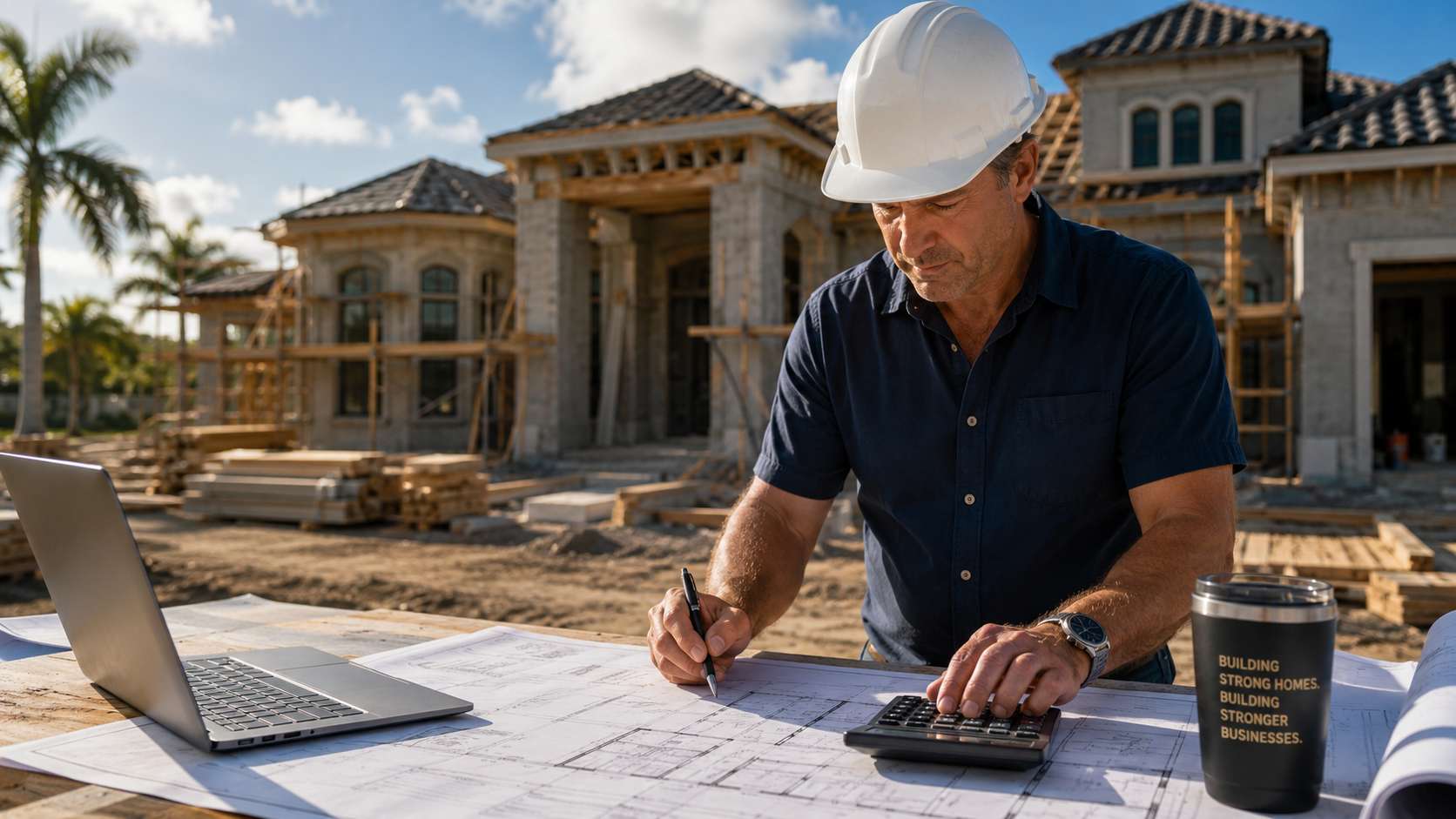
If you’re a custom home builder, you already know that building exceptional homes takes far more than quality craftsmanship. Every project involves countless moving pieces, from scheduling subcontractors and managing materials to communicating with homeowners and navigating changing costs. While most builders naturally focus on the jobsite, I’ve found that the companies experiencing steady, long-term growth also pay close attention to their financial performance.
At Hughes, Snell, & Tuscan, we’ve worked with Southwest Florida businesses since 1974, and we’ve seen firsthand how strong financial reporting helps a custom home builder make better decisions throughout every stage of growth. Whether you’re building luxury homes in Naples or managing multiple projects throughout Collier and Lee Counties, understanding your key performance indicators (KPIs) can help you protect profitability while planning confidently for the future.
Why Financial KPIs Matter More Than Ever
Many builders review their bank balance or profit at year-end and assume everything is on track. While those numbers certainly matter, they don’t always tell the complete story.
A successful custom home builder benefits from tracking financial data consistently throughout the year. Small changes in labor costs, material pricing, scheduling delays, or subcontractor expenses can gradually affect profitability without immediately showing up in your checking account.
When you monitor the right metrics, you’re able to:
- Identify problems before they become expensive
- Improve estimating accuracy
- Manage cash flow with greater confidence
- Plan equipment purchases strategically
- Prepare for tax obligations throughout the year
- Make informed hiring decisions
Instead of reacting to financial surprises, you can make proactive decisions that strengthen your business.
Gross Profit Margin Tells You How Each Project Performs
One of the most valuable numbers every custom home builder should monitor is gross profit margin.
This measurement compares project revenue against the direct costs required to complete the work. It provides a clear picture of whether your estimates are producing healthy profits.
Direct costs often include:
- Materials
- Subcontractors
- Direct labor
- Equipment used on the project
- Permits and project-specific expenses
If your gross profit margin begins shrinking from project to project, it may indicate:
- Estimates are too low
- Material costs have increased
- Labor productivity has declined
- Unexpected change orders aren’t being billed properly
Consistently reviewing gross profit allows you to adjust future bids before profitability suffers.
Job Costing Makes Every Estimate Smarter
Accurate job costing is one of the biggest advantages a growing custom home builder can develop.
Without reliable job costing, it’s difficult to know which projects are producing strong returns and which ones quietly reduce profits.
Some common job costing mistakes include:
- Forgetting to allocate equipment costs
- Missing small material purchases
- Incorrect labor allocations
- Delayed expense recording
- Failing to include overhead where appropriate
Strong construction accounting Naples FL practices help organize these costs throughout every phase of construction instead of trying to reconstruct the information after the project is complete.
Over time, accurate job costing improves estimating, bidding, scheduling, and profitability.
Cash Flow Is Different Than Profit
Many profitable construction companies still experience cash flow challenges.
A custom home builder may have multiple profitable projects underway while simultaneously waiting for progress payments, permit approvals, or customer draws. During that waiting period, payroll, suppliers, insurance, and subcontractors still need to be paid.
Monitoring cash flow allows you to anticipate future needs instead of reacting when cash becomes tight.
Helpful cash flow practices include:
- Forecasting several months ahead
- Tracking accounts receivable closely
- Reviewing upcoming supplier payments
- Planning equipment purchases carefully
- Maintaining adequate operating reserves
At Hughes, Snell, & Tuscan, we often help clients build forecasting tools that provide greater visibility into future cash needs, allowing business owners to make decisions with more confidence.
Work-in-Progress Reporting Helps Prevent Surprises
One financial report many builders overlook is the work-in-progress (WIP) schedule.
For a growing custom home builder, WIP reporting provides valuable insight into active projects by comparing:
- Contract value
- Costs incurred
- Estimated costs remaining
- Percentage completed
- Revenue recognized
- Billings received
Without accurate WIP reporting, it becomes much harder to identify projects that may be falling behind financially.
This information also supports better forecasting and helps business owners understand the overall health of their project portfolio.
Overhead Should Never Be Ignored
Direct project costs receive most of the attention, but overhead deserves equal consideration.
Administrative expenses can slowly increase as a company grows.
Examples include:
- Office salaries
- Software subscriptions
- Vehicle expenses
- Insurance
- Professional services
- Marketing
- Office rent
A successful custom home builder regularly reviews overhead expenses to ensure growth remains profitable.
Increasing revenue is important, but controlling overhead helps ensure additional sales translate into stronger bottom-line results.
Tax Planning Should Be Part of Every Business Strategy
Too many construction companies think about taxes only when it’s time to prepare returns.
Instead, proactive planning throughout the year often creates additional opportunities.
Depending on your circumstances, tax planning may include:
- Equipment purchasing strategies
- Entity structure reviews
- Retirement plan contributions
- Estimated tax planning
- Timing of income and deductions
- Depreciation opportunities
As a CPA for custom home builders Naples, we encourage builders to meet throughout the year rather than waiting until filing deadlines arrive. Planning ahead typically provides far more flexibility than trying to make adjustments after year-end.
Accounts Receivable Deserves Close Attention
A profitable project doesn’t help much if payments are delayed.
Every custom home builder should monitor accounts receivable regularly to identify invoices that remain outstanding longer than expected.
Questions worth asking include:
- Are progress billings being submitted promptly?
- Are change orders approved before work begins?
- Are retainage balances being tracked?
- Are customer payment terms being followed consistently?
The faster payments are collected, the stronger your cash flow becomes.
Your Financial Dashboard Doesn’t Need to Be Complicated
Some business owners assume KPI reporting requires complicated software or large accounting departments.
In reality, many builders benefit from reviewing a simple monthly dashboard containing key measurements such as:
- Gross profit margin
- Net profit
- Cash on hand
- Accounts receivable aging
- Work-in-progress summary
- Current backlog
- Overhead percentage
- Labor efficiency
- Job cost variance
- Cash flow forecast
The goal isn’t collecting endless reports.
The goal is identifying the handful of numbers that consistently support better business decisions.
Working With Industry Specialists Makes a Difference
Construction accounting comes with unique challenges that differ significantly from many other industries.
Revenue recognition, job costing, equipment depreciation, subcontractor reporting, payroll compliance, and project forecasting all require specialized experience.
That’s why many business owners choose a contractor CPA Naples FL who understands how construction businesses actually operate.
Rather than applying generic accounting principles, industry-specific guidance helps improve financial reporting while supporting better operational decisions throughout the year.
Building a Stronger Financial Foundation
Every successful custom home builder understands the importance of quality foundations. The same principle applies to financial management.
Strong financial reporting doesn’t replace craftsmanship, project management, or customer service. Instead, it supports every one of those areas by giving you accurate information when important decisions need to be made.
At Hughes, Snell, & Tuscan, we’ve spent decades helping Southwest Florida businesses strengthen their financial operations while preparing for long-term growth. Whether your company is expanding into new neighborhoods, managing multiple custom projects, or planning for the next stage of success, reliable financial information provides the confidence to move forward.
If you’re looking to better understand your numbers, improve job costing, strengthen cash flow planning, or develop a more proactive tax strategy, working with experienced professionals can help you make the most of every project. With the right financial insights, your business can continue building exceptional homes while creating an equally solid financial future.
Helping you build a stronger financial future, one decision at a time,
Keith Alexander, Partner